Unitedstyles launches in Russia & CIS

Unitedstyles launches in Russia

Russia is a key global market for fashion and luxury items, and unitedstyles has taken the strategic decision to make Russia & CIS its first non-English market. Not only has the website been localized for Russian-speaking consumers, but the company is offering Russian-language customer service and support through its Moscow-based partner, Interstice Consulting. Moscow-based customers will even have an opportunity to personally visit the local unitedstyles office and examine samples of finished garments, should they so desire.

Although the plan is to serve most global markets with our English website, we think localization is the key to success in several countries. Therefore over the next couple of weeks we will also launch a Japanese and a Dutch version of the website, and possibly more languages will be added later this year. More updates here soon!

Official press release:

Unitedstyles — where you design your own, totally unique fashion online — announces its entry into the Russian & CIS market with a Russian-language website and the appointment of a local representative, Interstice Consulting.

Unitedstyles: design your own fashion

Unitedstyles.com offers a brand new fashion experience. It enables you to design your own, totally unique fashion online and then have it made especially for you.

Fashion for you, by you

Fashion is about more than the way you look; itʼs about who you are and an expression of your personality. However, 99.9% of clothes in your wardrobe are designed by others and never for you, but for everybody.

At unitedstyles.com you can now change this by designing your very own fashion. Select and combine a wide variety of styles, sleeves, necklines and trim. Color your design and/or apply one of the many, completely customizable and scalable prints.
Share your unique design with your friends and followers on Facebook, vKontakte and Twitter, and optionally preview it in lifelike 3D.

Once you are satisfied with the result you can buy your self-designed fashion piece and have unitedstyles produce it for you personally. A few weeks later your one-of-a- kind dress or top will be delivered to your doorstep.

This also makes unitedstyles the perfect remedy for “same dress syndrome” — the sense of panic and anger you feel when someone else shows up to a party wearing the same dress as you.

Pricing starts at a very reasonable US$69.95 for tops and US$99.95 for dresses, making the experience of creating a unique garment at unitedstyles truly accessible. Shipping is a flat US$20 anywhere in Russia & CIS.

Production – personal and green

Printing and dyeing your designʼs fabric is done by unitedstyles in the greenest way possible, by using digital printing technology. This prevents waste and unnecessary pollution because only the amount of fabric that is actually needed to make your garment is being printed.

Experienced unitedstyles tailors finally stitch your unique design with a level of personal care and craftsmanship that is impossible to find in mass-produced fashion. Furthermore, unitedstyles fully guarantees its customers that their design will fit them perfectly.

“Producing fashion piece-by-piece demands a totally new approach. To ensure the self-designed garment will fit perfectly, we personally contact our customers after purchase to discuss sizing and the desired fit”, says co-founder Xander Slager

About unitedstyles

Unitedstyles is founded by four European entrepreneurs based in Shanghai – currently one of the most dynamic cities in the world. With an international team (8 nationalities), offices in the U.S., Netherlands and now Russia, plus the launch of Japanese and Dutch versions of unitedstyles.com expected soon, its reach and vision is indeed global.

Unitedstyles is founded by:

· Xander Slager (Netherlands), founder of Dutch outerwear brand Spoom

· Marc van der Chijs (Netherlands), serial Internet entrepreneur and co-founder of Tudou.com (the “YouTube of China”, NASDAQ: TUDO)

· Joop Dorresteijn (Netherlands), entrepreneur with strong passion for technology

· Dirk Lorré (Belgium), consumer psychologist and innovation consultant

Unitedstyles has already received international recognition for its innovative business model, by being chosen as a finalist in the TechCrunch Disrupt startup competition in November, 2011. The company has also been written up in the Business of Fashion blog, perhaps the most influential global blog of its nature.

Unitedstyles in Russia & CIS

Russia is a key global market for fashion and luxury items, and unitedstyles has taken the strategic decision to make Russia & CIS its first non-English market. Not only has the website been localized for Russian-speaking consumers, but the company is offering Russian-language customer service and support through its Moscow-based partner, Interstice Consulting. Moscow-based customers will even have an opportunity to personally visit the local unitedstyles office and examine samples of finished garments, should they so desire.

“Unitedstyles is a revolutionary idea in the fashion sector, and what better place to launch than in Russia! Weʼve been working in the online customization space for some time and are sure unitedstyles will become popular with Russian women, who are world renowned for their sense of style”, says CEO of Interstice Consulting, Peter Prabhu

Media contacts

International: Xander Slager, xander@unitedstyles.com tel +31-6-5257.6341 (NL) or +86-186.0210.8376 (China)

Russia & CIS: Peter Prabhu, peter@unitedstyles.com tel +7 916 404 97 52 (Russia)

Online media kit: http://unitedstyles.com/media.zip

Russia & CIS social media links:

http://facebook.com/unitedstylesru

http://vkontakte.ru/unitedstylesru

http://twitter.com/unitedstylesru

unitedstyles offices:

Global: 1225 Tongpu Road, Building 8, 3F, 200333, Shanghai, China

Russia & CIS: 1st Dobrininskiy per. 15/7, Office 11, Moscow 119049, Russia


WPP acquires CIC – congrats to Sam Flemming & the team!

I am very happy to announce that Chinese leading social business intelligence provider CIC was officially acquired by WPP’s Kantar Media. The deal took quite some time to negotiate, but I am very happy for founders Sam and Vennie and the rest of the team that the deal has now officially closed.

I have been on the board of CIC since 2007 when I led the angel round for the company. It was a great ride over the past couple of years (like every young, growing company with ups and downs), and I am impressed by what the management team and the rest of the CIC family managed to achieve over these past years. CIC not only built a very strong portfolio of services and clients, but it also managed to build and keep a very strong company culture. It’s a company that people love to work for, and I am sure that has helped for the sale to WPP as well.

On behalf of all the angel investors I would like to thank Sam, Vennie, Daisy, Denis and Paul for their hard work and dedication to get this deal done. As an investor you never know whether an angel investment will eventually pay off, but this team made it work. It’s a pity that I will now have to leave the CIC board, but I look back to the past couple of years with good memories.

At the quarterly CIC board meeting at their Shanghai office

The official press release:

Kantar Media to acquire leading Chinese social business intelligence agency CIC

Deal extends WPP unit’s capabilities in social media listening and analysis into world’s second largest ad market

Kantar Media, the media research and insights division of Kantar, has expanded its social media offer in China with the acquisition of CIC, a leader in the Chinese Social media listening and analysis industry. The deal will build on the company’s significant global presence and activities in media market research and insights with 5,000 staff across 60 markets, with CIC working along with the other leading Kantar Media partnerships in China including CSM and CTR. Kantar Media is a unit of Kantar, the consumer insight arm of WPP, the world’s largest communications services group.

The acquisition comes in response to the growing client need for the real-time monitoring of consumer brand conversations in a market with over 70% of the 500 million Internet users on social media and with over 50,000 enterprises owning a microblog account. It gives Kantar Media a strong base in China and Asia Pacific for social media intelligence and insights as China this year became the world’s second largest advertising market.

Founded in 2004 and with offices in Shanghai and Beijing, CIC coined the now standard Chinese industry term Internet Word of Mouth (IWOM) and pioneered the concept of social business in China. With a team of over 60 social media consultants, innovative dashboards solutions and patent pending in technologies such as Chinese language text mining, CIC has led the industry in developing and applying social media intelligence and insights across its roster of blue-chip clients includes 5 brands out of the top 10 listed in Brandz Top 100 Most Valuable Global Brands, and is at the forefront of monetizing the social business industry in China.

Sam Flemming, founder and chairman of CIC, commented: “In joining Kantar Media, we will provide our clients with accessible, intelligent and meaningful analysis of brand discussions wherever they take place. We will also develop new client offers by identifying the synergies between our data set – including an archive of over 3 billion consumer brand mentions – and Kantar Media’s vast data resources. Further, the relationship will allow CIC to bring social business intelligence and insight to Kantar and across the whole WPP network as well as
replicate its success in the broader Asia Pacific market.”

The CIC team will remain based in Shanghai and Beijing, China, and its management team will report to Jean-Michel Portier, global CEO of Kantar Media.

Portier said: “It is clear that the monitoring of consumer, brand and market discussions and the resulting insights are vital tools for executives worldwide. With Kantar Media Cymfony, we are already committed to maximizing our clients’ success in monitoring and analyzing consumer discussions in the US and in Europe. With CIC, we are achieving another milestone to establishing the same recognition for excellence in China that Cymfony already has .CIC is an exciting and successful company. CIC will enrich our global digital expertise in capturing millions of online conversations and “making sense of the buzz” in order to provide interpretation that informs strategic decisions and leads to action.”

The Judgment of Paris

Judgment of Paris

If you have been following my blog, Facebook or Twitter for a while you probably know that I love to drink wine, especially good wine. I also love to read books and watch movies about wine. One of my all-time favorites in the wine movie genre is Sideways, a movie about a road trip tasting wines in Southern California. If you happen to find it online or on DVD make sure to watch it with a good glass of Californian wine in your hand!

Bought a few bottles of wine :)

I am a big fan of New World wines, with a preference for Californian Cabernet Sauvignon and Chardonnay, and New Zealand Sauvignon Blanc. For me good wines from these areas top similar priced French wines, although French wines have for a very long time been considered the best wines in the world. As a kid we only drank French wine at home. But if you look at the wines that I stock in my small cellar in China, you’ll see that they are mainly wines from California, Australia and New Zealand – with Alsace wines and Champagnes being the only regular exceptions to the rule.
 
I have often wondered what exactly happened in the world of wine over the past 30-40 years, especially how New World wines came up and how France started to slowly lose it’s dominance over the global wine market. A few weeks ago Gary gave me a book to read that discusses exactly this topic: Judgment of Paris: California vs. France and the Historic 1976 Paris Tasting That Revolutionized Wine, by George Taber. The book describes how the California wine industry developed from the 1850s until the early 1970s, especially focusing on the period starting in the 1950s.

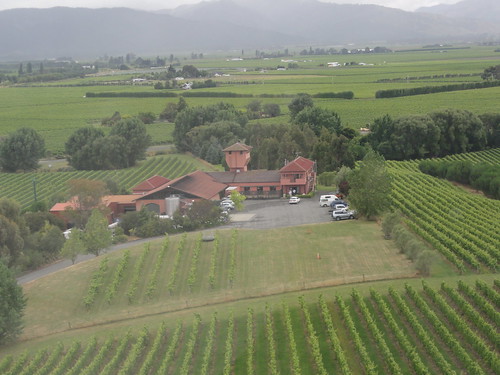
Robert Mondavi winery in Napa Valley

Mr. Taber describes the lives of 3 wine makers in detail, following them from their (sometimes very humble) beginnings to their triumphs in making excellent wines, trying to make wines as good as the French ones. At the same time the book describes a British wine merchant in Paris, Steven Spurrier, who decides to host a blind wine tasting between Californian wines and French wines in 1976. The judges were almost all well-known French wine connoisseurs. At that point nobody really doubted that France produced the very best wines in the world, but it turned out that for both the white and the red wines the Californian wines won.
 
This tasting, which became known as the Judgment of Paris, changed the perception of the world about wines. Not right away, because only a Time magazine reporter (Mr. Taber, the author of the book) covered the event and it took some time before other media picked it up, and many (mainly French) people criticized the results. But eventually the news spread, even in France where the major media dismissed the results.

Kendall-Jackson Winery

This event was the beginning of New World wines, and the last part of the book describes what’s happened with wines in among other New Zealand, Australia, Chili and of course California after 1976. Interesting is that the original Time article is available online, although if you don’t have a subscription you can only read the first part. One more reason why I love the Internet, I am sure for many years it was very hard for anybody interested in reading the original piece from 1976, but now it’s just a click away.
 
Not only would I recommend to read this book, but if you enjoy movies about wine you should also watch the film version of the book, Bottle Shock. Although the story is a bit different from the story in the book, it’s a great movie to watch. It makes you want to set up a vineyard or winery as well, or at the very least it makes you want to open a bottle of good wine while watching the film. Cheers!

DailyMile 2011 Stats

DailyMile.com 2011 report

Next to Facebook and Twitter there is only one other social network that I check and update almost every day: DailyMile, the social network for runners (and bikers, rowers, etc.), that I have been using since 2009. I log all my runs here, describing how I felt and where I ran, and I follow what kind of runs my friends and family (my dad and sister are also on here) are doing.

I love to read the updates of all my friends here and it often motivates me to put on my running shoes (or better, my Vibram Fiver Fingers) and hit the road or the treadmill. I especially like the stats they provide, and just like last year DailyMile sent all its users an overview of their activities in 2011. Today I got mine, and I decided to post a partial screenshot on my blog.

The patterns are pretty clear, I ran a half marathon race in late April, so I trained seriously in the weeks before that. Then I relaxed a bit until I started my training for the New York marathon in June/July. In September I had an injury so I didn’t run for a few weeks and then I pushed hard again in October with 172 km of training during that month, before the 6 November full marathon. Thanks for the overview Dailymile, it’s nice to see my aggregate training results.

Scott’s 4-year birthday party

Scott's 4 year birthday party

Yesterday Scott had his 4-year birthday party with some of his classmates and friends. Scott was very happy to see all of them during the weekend and of course to get many presents. We did the party at an indoor kids playground, Mamameya on Hongmei Lu, which was a big success. It’s easier for us, no need to find a restaurant to do the catering and to hire a clown and a face painter etc., and the kids love to to play in their playground. If you have toddlers in Shanghai and plan to organize a kids party make sure to check Mamameya out.

Below some pictures with impressions from Scott’s birthday party.

Scott's 4 year birthday party

Telling a short story to the kids

Scott's 4 year birthday party

The tables were set for drinks and snacks for all the kids

Scott's 4 year birthday party

Elaine also participated, she was very happy to join the activities

Scott's 4 year birthday party

Scott’s birthday cake: Lightning McQueen (from the Disney movie Cars)

Scott's 4 year birthday party

A magician doing tricks

Scott's 4 year birthday party

Scott did not want to help with the magician’s tricks, but Elaine did not mind

Scott's 4 year birthday party

Instead of helping the magician Scott ran away, he preferred to drive a toy car through the playground!

Building a 30-story hotel in 15 days

Just over a year ago I wrote a post about a Chinese company, Broad Group, that was able to build a 15-story hotel in 6 days, using prefabricated modules. An amazing feat, but they topped it in December 2011 by building a 30-story hotel in 15 days, finishing it on New Years Eve. And once again they made a time lapse video and put it online. According to Broad Group their building can withstand a 9.0 earthquake and is more energy efficient than regular buildings. Only in China?

Source: Shanghaiist

Crossing The Line

Crossing The Line - documentary about the last American defector in North Korea

In April 2001 I went to North Korea with a group of friends for a one week “vacation”. The trip was organized by Nick Bonner, who was my downstairs neighbor in Beijing at that time, and one of the other participants was Daniel Gordon. Dan always carried a small video camera with him while in the DPRK, and after a few days he told me that he was shooting a documentary (at that time still more or less secretly). That was the first footage for The Game Of Their Lives which came out a year later. It was quite a success and Dan went on to direct several other films related to North Korea.

One of them is Crossing The Line, a documentary about James Dresnok, a US soldier who defected from the South Korean side of the demilitarized zone to North Korea in 1962. It was a sudden decision because he was angry at his superiors, but it was a decision that was irreversible, because he could not leave anymore and has been in North Korea ever since. Dan and Nick went to Pyongyang to meet with him and shot this documentary based on the interviews with him.

I did not know how I could easily watch the documentary in Shanghai (my local DVD store does not carry it), but then I realized there is a copy on YouTube. So last night I sat down with a bottle of Sauvignon Blanc and watched the 91 minute documentary. I was blown away by it, not only was it very well made but the story is out-of-this-world. I thought about the documentary for quite some time after watching it and this morning it was still on my mind, so I decided to write a blog post about it.

Mr. Dresnok went to the DPRK without really thinking about the consequences. It may seems like something that nobody can ever understand, but to me the documentary made clear why he did it: he had been abandoned by everybody during his whole life and and just wanted to run away from it all. His parents divorced and then abandoned him, he ran away from foster homes and when he got married his wife had left him for another guy when he came back from a 2-year stay in Germany. Nobody wanted him, and I get the feeling he desperately wanted to have a safe and stable life. And guess what, that’s what he eventually got in North Korea.

He comes across as a well-spoken person, who seems to be happy with his current life. But is he really? That was the question that was on my mind and that I have been trying to answer for myself. Is he a great actor? Or is he completely brainwashed? Or does he truly believe what he says? I think it’s a combination of all three things. Mr. Dresnok never finished high school and was still very young, meaning that it is probably relatively easy to manipulate his thoughts. I think that’s what happened, and after spending twice as long in North Korea as he lived in the US it’s not so strange that he would be brainwashed.

But I also think he is acting. Especially the part where he hears what Mr. Jenkins (a fellow defector who managed to escape North Korea during the time of filming) has to say about North Korea. It felt like he was acting there, I think he realized that he would be in danger because Mr. Jenkins spilled some secrets about their early life in the DPRK. After hearing Mr. Jenkins side of the story I also realized that Mr. Dresnok may seem like a nice person, but that he probably was a very different person in reality. Mr. Jenkins said that Mr. Dresnok beat him up at least 30 times when the Koreans asked him to, which suddenly seems quite likely. Mr. Dresnok is a big guy and could have been a bully to make sure he would get a good life, and he despised Mr. Jenkins who had a higher rank than he had.

At one point during the documentary it becomes clear that Mr. Dresnok had a relationship with Mr. Jenkins wife, but I wonder whether Mr. Jenkins wife (who was a young kidnapped Japanese lady) really wanted this. Mr. Jenkins caught Mr. Dresnok with his hands in Mrs. Jenkins pants at a party… The more I think it the more I feel this may have been part of Mr. Dresnok’s bullying behavior, where he felt he could get away with this. Mr. Dresnok almost seems proud of it when he talks about this.

My conclusion for now is that Mr. Dresnok might be more than just the simple guy that he claims to be. He clearly is someone who did not fit in in society and has trouble with relationships, but also someone who was very good at manipulating others, despite only having a few years of formal education. Is he trying to fool the documentary makers with his story? I think he is partly lying, but I also think that he has been in North Korea so long that he believes his own story. And I think he is able to close his eyes for what really happens in the DPRK. It’s basically a trade he is making with the ruling Party: you give me food and protection, and I will tell a positive story about my life here.

Is he happy? I think he is satisfied with his simple life. Had he stayed in the USA he would have probably had a simple life as well. No hunger, but also no wealth. At least in the DPRK he even managed to become a celebrity (he played in many movies, so everybody knows him), and he was treated well. But he was not truly happy. He tried to escape once at the beginning of his stay (the Russian embassy kicked him out), but also now he pretends to be happy but that’s not the complete truth. This suddenly became clear to me in the last part when he is fishing and his Korean comrade wonders whether Mr. Dresnok really likes fishing. He pretends he loves his life, but I think he does miss his former life, especially after Dan shows him pictures of his hometown. Maybe this also explains why he smokes and drinks a lot.

To me the documentary was intriguing, and it brought back memories from my trip to North Korea. See it for yourself on DVD or on YouTube (part 1/6 is here) if you have any interest in life in the DPRK, I highly recommend it.

The trailer is embedded below and can be viewed here: http://www.youtube.com/watch?v=5kBmAnjlJ3A

Christmas holiday on Koh Samui

Beach in front of our villa on Koh Samui

This year we decided not to spend Christmas and New Year in Europe, but to fly for a week to a tropical beach with the kids. We opted to go to Koh Samui, one of my favorite islands in South-East Asia. I had not been there since May 2005 (I had to check my blog for that!) and I was looking forward to see the beautiful Thai island again. We also invited Grace’ parents and her sister to join us for this trip, so we had a pretty large group.

Because we booked quite late it was not easy to find a suitable accommodation, with suitable meaning a big private villa directly on a quiet beach with full service (maid, cook etc.). Most villas had been rented out months in advance, but we eventually found one through a Russian (!) website. I have to admit that it took a bit of courage to send a big amount of money as a prepayment to a company I didn’t know and for which I could not find any references online, but everything worked out fine. Grace was a bit worried though, but no risk, no fun, right?

Relaxing with a book at our villa on Koh Samui

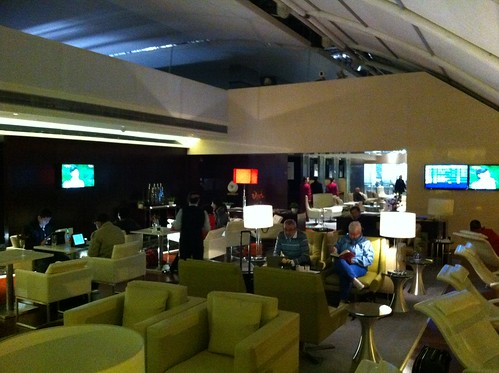
There is still no direct flight from Shanghai to Koh Samui (I guess the runway is too short for larger airplanes?), so we had to change planes in Bangkok. That made the whole trip quite long, but the kids could sleep in the lounge. Well theoretically they could, but in the end they refused to sleep and only wanted to run around or play with their iPads and Nintendos. At least they slept a bit on the plane, so they were not too tired when we arrived on Koh Samui. The airport on the island was still as special as a few years ago: it’s an open air airport, in a tropical garden setting, where you immediately feel that your holiday has started.

Koh Samui airport

A van picked us up and drove us in about 20 minutes to our villa on Bang Po beach, on the northern side of the island. The villa was managed by a hotel, where we had to check in and from there we walked to the house. The place was amazing. You never know what you get when you book through a website, but the pictures online were just as good as the villa itself. The villa consisted of 2 structures, one was the main building with a living/dining room with kitchen, and the master bedroom with huge bathroom (partly inside and partly outside). The other structure consisted of 2 stories, a suite with living room, bedroom, bathroom, kitchen and balcony upstairs and a bedroom with bathroom downstairs. The villa had a nice garden with a pool that was directly next to the beach. I am not easily impressed, but this was just amazing to see.

Scott and Elaine at our villa on Koh Samui

We ordered a quick dinner and then put the kids to sleep. That was not too difficult, Scott was asleep the moment we put him in his bed. I did a couple of emails and had a few glasses of Australian Chardonnay on one of the outside deckchairs. Then I went to bed quite early, which was a good thing because the kids were awake early the next morning. I decided to go for a walk on the beach and Scott wanted to join me. We seemed to be the only ones on the beach, partly because it was so early in the morning and partly because it turned out to be a very quiet beach. Scott like walking in the sand a lot, but it went quite slow. He had so many new things to see and for everything he asked me what it was or why it was like that. “Why daddy?” is probably his most common phrase at the moment, he wants to understand everything around him.

Sunset on Koh Samui in front of our house

Another thing he kept on saying at the island was “I don’t like the sound of the sea”. For some reason he did not find the sound of the waves relaxing… It started the first morning when he asked me “What’s that noise?”. I did not hear anything except for the waves so I asked him what he meant, and it turned out the sea was what was irritating him. He said it many times over the holiday, each time when we were on a beach. Only at the end of the week he stopped saying it, I wonder if he will say it again during a next holiday.

Private pool next to the beach at our villa on Koh Samui

When we got back from the walk the kids wanted to go for a swim, so that’s what we did. Then we had breakfast at the hotel (we could choose, they could bring us breakfast or we could use the buffet breakfast at the hotel, the latter seemed much better). After breakfast I rented a car for the whole week and then we relaxed a bit by the pool.

Elaine and papa

During most of the vacation (which lasted a week) we followed a similar schedule most of the days. Scott normally woke me up around 7 when he wanted to go for a swim. I then put his swim shorts on and put him in the pool. Then I normally made a coffee or went for a short run on the beach (with someone else staying with Scott of course) and after that I joined Scott in the pool. Around 8:30 we would have breakfast with the whole family, followed by a few hours of sightseeing and a lunch at an upscale beach resort or golf course. Then the kids slept for 2 hours, during which I normally did some work and tried to keep up with my RSS feeds and social media. After the kids woke up they played in the pool or on the beach, before we went for an early dinner. We often went out for dinner at nearby seaside restaurants, or we had staff to prepare dinner in our house. After the kids went to bed (normally not before 9:30 PM) I had a glass of wine and checked Facebook and Twitter, or I tried to read a bit in my book. I only read one book during my whole holiday, normally I manage to read 1 book ever 1-2 days while on a beach vacation.

BBQ at our villa on Koh Samui

Koh Samui is still a fantastic island, I had great memories from a few years ago and I still feel the same about the place. There are definitively more tourists (I especially noticed a lot of Russians everywhere), but it’s also more westernized with big supermarkets like Tesco and Makro, and even German and French bakeries. There are even international schools and I was told the hospitals were excellent (medical tourism anyone?). It would be a great place to retire if I would have been a bit older than my 39 years. We actually even looked at some property on the island, there are some amazing plots of land and villas for sale. If you want to buy a house in South-East Asia this is probably one of the best locations in terms of quality of life, availability of property on the beach or with ocean view, and price. Sure, it’s not cheap and there are restrictions on buying real estate for foreigners, but for me the pros outweigh the cons if I would buy anywhere. Who knows…

Santi Thuri house

Were there any negative experiences? Sure, a couple of them. One is the fact that even at upscale resorts communications with staff was difficult. Bringing the wrong food or drinks, or only bringing part of it and the rest 30 minutes later. Not a big thing on a holiday, and something that also happens to tourists in China. I guess learning a few words of Thai will make a big difference. Another one was that traffic was quite dangerous, especially because of the many inexperienced tourists on motorcycles and sometimes trucks that overtake at the wrong moment. I feel traffic in China is a lot less dangerous than on Samui, but maybe that’s also because I am more used to Chinese driving behavior. Lastly, the Internet connection at our villa was pretty bad at times. Often Skype calls were interrupted and playing music through Spotify only worked 1 out of 4 times. I understood that some places have glass fiber on the island, so likely it was just a local experience.

Family portrait at Napasai on Koh Samui

Overall I loved the island and the vacation we had there. It was fantastic to spend more time with the kids and to see how happy they are playing outside the whole day – something they often miss in Shanghai. Koh Samui is very cheap, you can have great food everywhere for prices that are much lower than you get similar food in Shanghai. The last night on Samui I was looking out over the sea in front of our place when I started wondering if this would not be a great place to start an incubator. I am sure lots of young people would not mind living here for 1-2 years (or even longer) to build an (Internet) company, and the cost of living here is a fraction of what it is of that in Silicon Valley or even Shanghai. Likely Thai law will make it difficult (I didn’t really look into this yet), but it’s something I will keep in mind for the future.

More of our Koh Samui holiday pictures here in a set on Flickr

Leaving Koh Samui for Bangkok