Crackdown on satellite dishes in Shanghai

I hardly ever watch TV, I find it a waste of time and prefer to spend that time doing more productive things. One reason for this is that Chinese TV sucks, it’s low quality mass entertainment that does not really fit what I would like to watch. The few times a year that I do watch TV I normally turn on our illegal satellite receiver, to watch one of the 50+ satellite channels (mainly Philippine, Japanese or Hong Kong stations, but also Deutsche Welle, BBC, CNN and some documentary channels). But there is a chance that might be over soon.

In China only high-end hotels and residences with more than 80% foreigners are allowed to receive satellite TV. However, just in Shanghai there are already 300,000 satellite dishes, almost all of them illegal. Today the Shanghai Daily mentions that there is a crackdown going on to get rid of all these dishes. The goal seems to be that by the time the Olympics start people can only rely on good old CCTV to watch sports. According to the article, the authorities sent more than 11,000 property management companies a notice to take down satellite dishes.

Not sure if this is just rhetoric or if the government is really cracking down on illegal TV. In my compound I did not see a notice yet, even though almost every apartment has its own satellite dish. Also the wording in the newspaper gives me the idea that this may not be too serious: According to a spokes person people have 3 months to dismantle their receivers, but he added “Dismantlement is not our final target. The administration still hopes satellite owners realize their illegal action and remove them voluntarily.” Sure, so people can only watch all Chinese channels? Welcome to the real world.

Dutch Chinareis Delegation – Shanghai & Chengdu (March 30 – April 5, 2008)

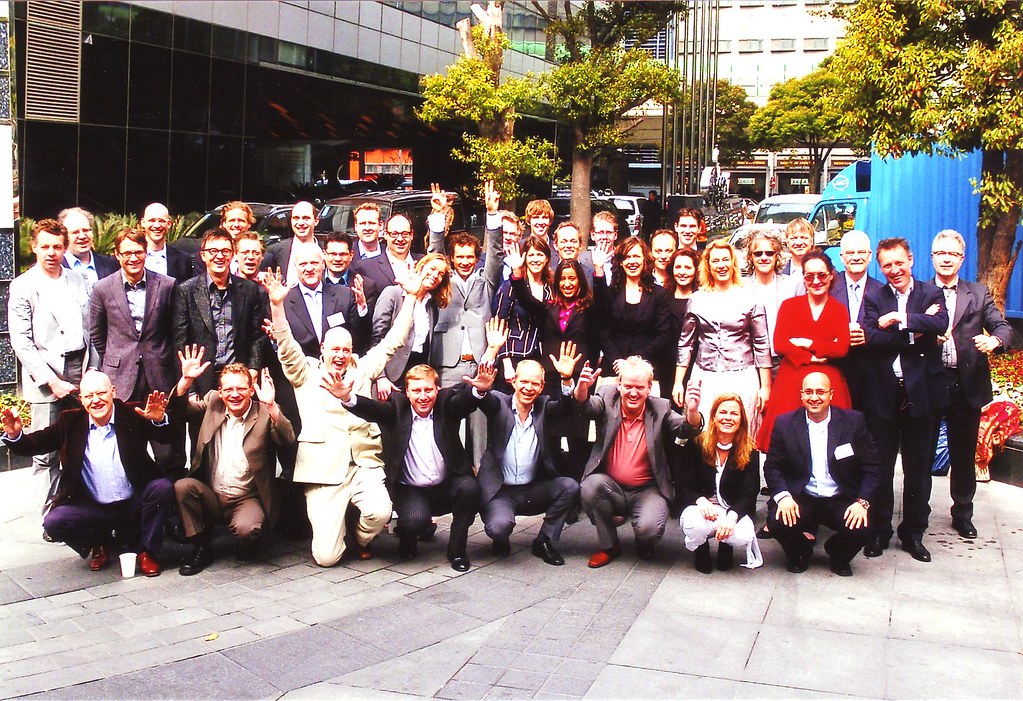
The past week I spent with a senior Dutch delegation of IT and new media executives that visited China. I organized most of the company visits in Shanghai and Chengdu, and of course I also made sure that we had a good evening program. Already a year ago Marco Derksen (Marketingfacts.nl) had talked to me about organizing a trip to China, and last September during the PICNIC conference in Amsterdam the topic came up again. Marco, Vincent Everts and myself then started to develop the idea and in November we had decided on a date and a rough program. We aimed at about 15-20 participants, but eventually ended up with 42 people. Mainly founders or CEO’s of companies, but also people from the Dutch media, universities and some investors. A high-level group with high-level expectations, so I did my utmost to make it a success.

The last weeks before the group arrived were not easy, because the Shanghai office of a German event agency that I had hired to help with the organization failed to deliver results. One of their German expats who was in charge of the project totally messed up, so I basically had to take control of the project next to my daily work. The event agency eventually replaced the young German man with some great, hard-working local employees and avoided a disaster by doing so. But it caused me quite a bit of stress both in the days before the trip and during the trip itself. Eventually most things were sorted out, but it cost me a lot of sleep. I will have a word with the head of the event agency this week about what happened. As for the German employee, I would be very surprised if this will not have consequences for him and I will certainly make a recommendation on what to do with him. The event agency is actually pretty good, but this kind of employees are a real danger for a company, especially when they are so smooth-talking that nobody realizes what is really going on.

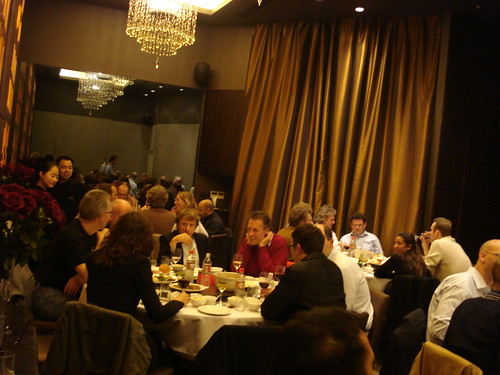
The group arrived in Shanghai on Sunday morning at 8 AM and spent most of the day walking through Shanghai. We visited the Bund, Yuyuan, Xintiandi and part of the French Concession (all on foot of course), and were back in the hotel by 5 PM for a cocktail reception with Mr. Eric Verwaal, the Dutch consul general. After the reception he gave a very interesting presentation on the history and economic development of China. It was a pity that for some participants the combination of jet-lag and a couple of beers plus the high temperature in the room meant that they could not manage to stay awake during the talk, they missed some good insights. Next time it’s probably better to first have a presentation and then do the cocktails. At night we had dinner with the sub-groups (the group was divided in 6 sub-groups that focus on one area, mine was (not surprisingly) online games). By 11 PM most people were completely exhausted and dragged themselves to bed.

On Twitter I noticed that Vincent Everts continued to work until at least 2 AM on the first of his videos. He produced a whole series of them, and most of them can be seen here (in China you will need a proxy). Several were also published on sites of major Dutch media, such as De Telegraaf, het Financieel Dagblad, Webwereld and nu.nl. Lots of exposure for the trip, but not much sleep for Vincent because of this. Because most of the participants are highly active on the internet the whole week articles and blogs appeared in Dutch media, and there were lots of tweets on Twitter (backchannel keyword Chinareis) and pictures on Flickr (tag: Chinareis).
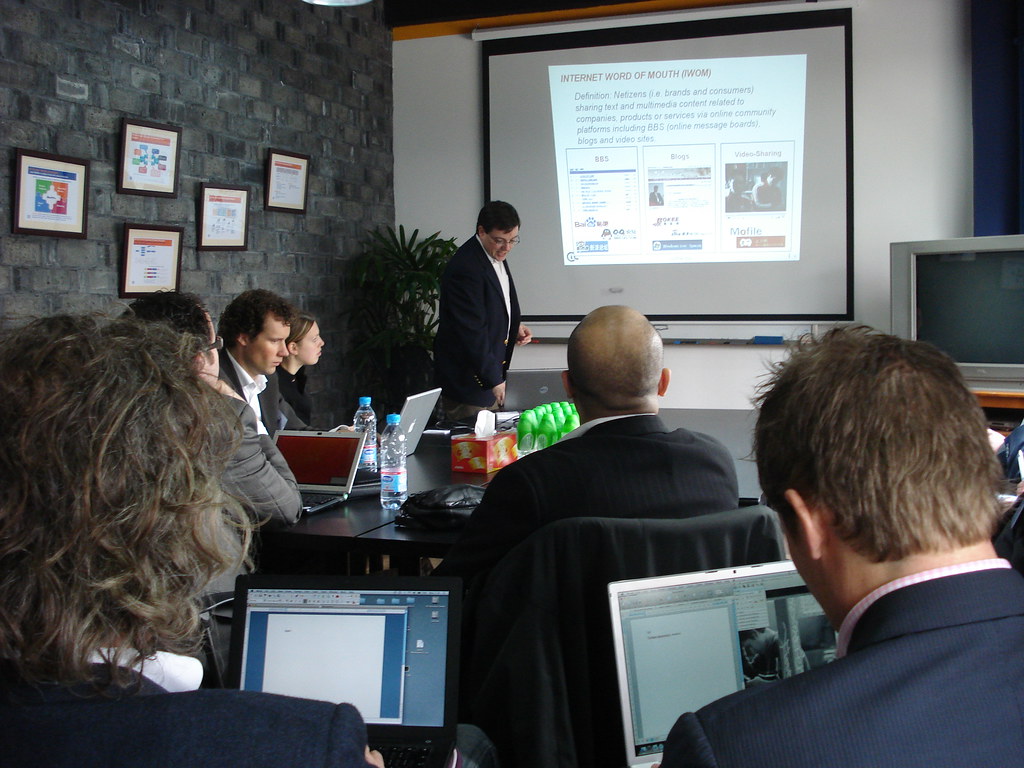

Monday and Tuesday we mainly had company visits in Shanghai. We divided the group into 3 tracks, so people could decide where to go. We tried to make each track equally attractive, but that was not easy. Some of the many companies that we visited on Monday and Tuesday included CIC, Ubisoft, JWT, Philips, iResearch, CEIBS, Tudou and Spill Group/Zlong Games (there Thijs and I even gave presentations to two groups). Tuesday night we organized a network dinner at Three on the Bund where a total of 73 people participated. Wednesday was a travel day, but in the morning we arranged a visit to the Lenovo plant in Shanghai for one half of the group and a visit to Shanghai Media Group for the other half. In the afternoon we traveled to Chengdu.
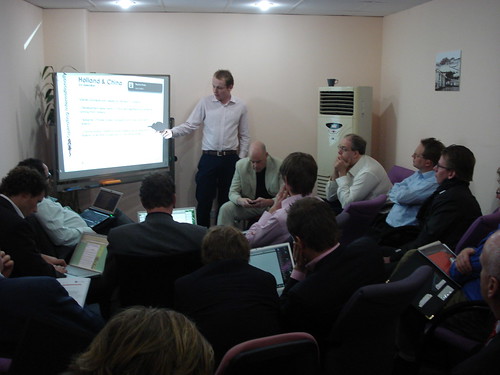

Thursday was a company visit day again, with an introduction by the Chengdu Hi-Tech Zone government and 9 company visits (among others Shanda and Plenware, but also the EU China incubator center). This was followed by a tour of Sichuan University, where the participants not only saw the campus and the classrooms, but even got to take a look at the dorms from the inside (which was a shock for some). At night we had the Chengdu network dinner, where the basis for some business deals was made.
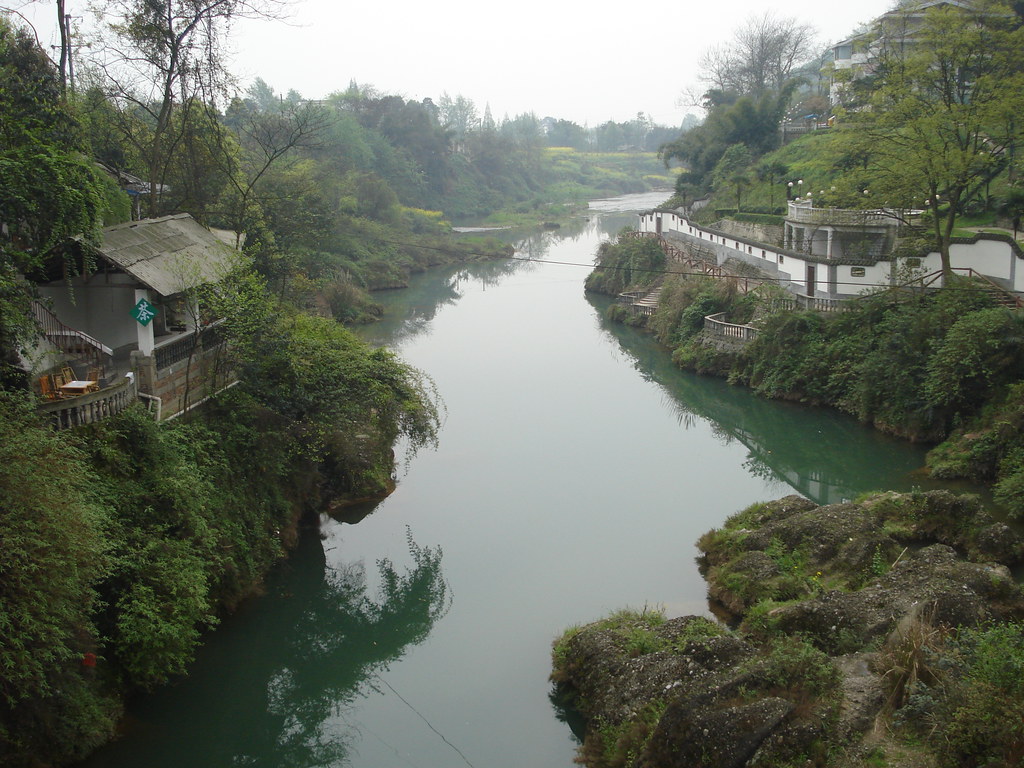
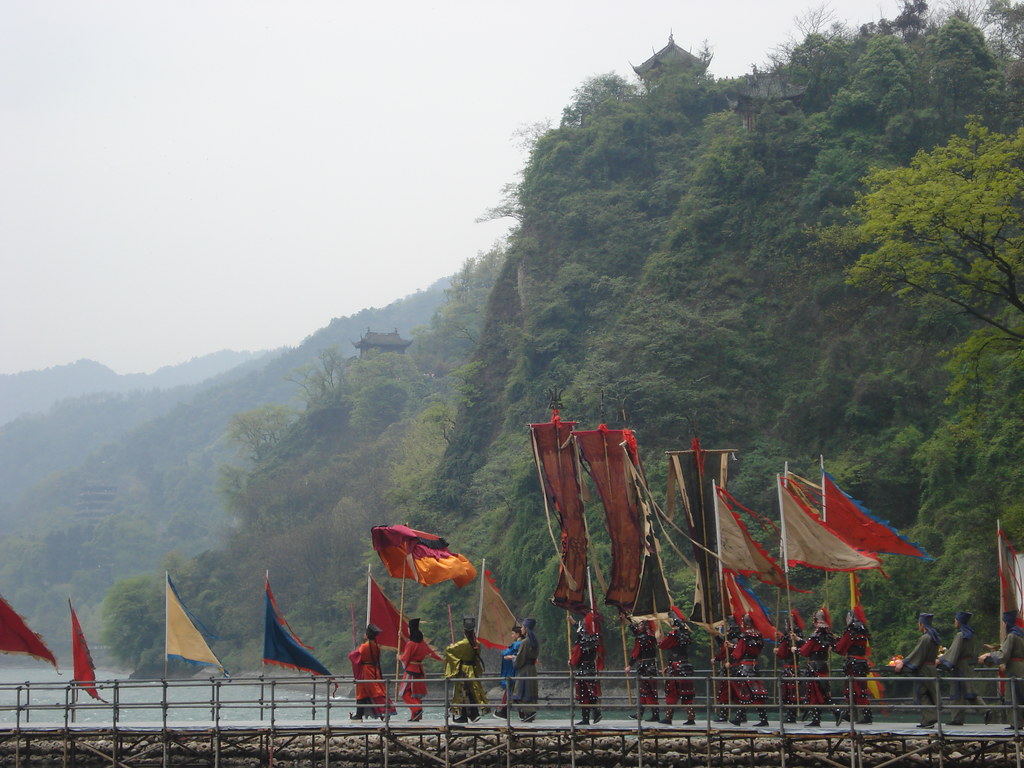
Friday was Qingming Festival in China, which this year for the first time was a public holiday in China. Company visits were therefore not possible, so we organized a seminar where a venture capital firm and two start-ups (CallMe and Yawaa) got to present. Then the local government gave a presentation, followed by a presentation and live demonstration of Pioco (bluetooth media) in the main shopping street in Chengdu. The afternoon was even for me a bit of a surprise. Steve Chao, Pioco’s CEO, had organized it and he did an excellent job. We first drove to Dujiangyan where we were guests of honor at the “Water Release Festival”. Actually, this is a once-a-year performance, but the mayor arranged that the impressive performance would be done one more time especially for this group! We were very honored of course.

After that we went to Jiezi, a small village, where the group could stroll around. A local TV crew filmed us during the whole visit. We wer
e the only foreigners as this part is apparently not open to foreigners at the moment, and Vincent Everts and I were asked to do an interview with them (“Will you tell the people in Holland about Jiezi?”). The last part of the visit was to Mt. Qingcheng, the birth place of Taoism. To our big surprise, we were received by the head of the Taoist religion and she (yes, the head is a woman) showed us around the temple / monastery where she lived. She also invited us for tea in a place where normally high officials are received (the proof were the pictures on the wall of Chinese leaders sipping tea with her in the same room). It was a magnificent place to be, and most participants (including me) were quite impressed. I knew that Steve has excellent connections, but the afternoon program was better than I had ever expected.

At night we had farewell hot pot dinner where I received lots of presents (including a great book by Al Gore and an iPhone – thanks guys!), followed by a night on the town in club One. We actually spent every night in bars and night clubs, and because of that I did not get too much sleep (on average less than 4 hours a night). But that did not matter, it was an excellent week, where I got to know many new people and where the group hopefully got a better understanding of what is happening in China. That last part was one of my main objectives for organizing this trip. I love China and its people, and (as I said before) I feel the foreign media does not do the country justice in its reporting. It’s not so black and white as many people seem to think, and I hope a lot of people in the group realize that there is more to the China story than you read in the average foreign newspaper.
Scott travels in style

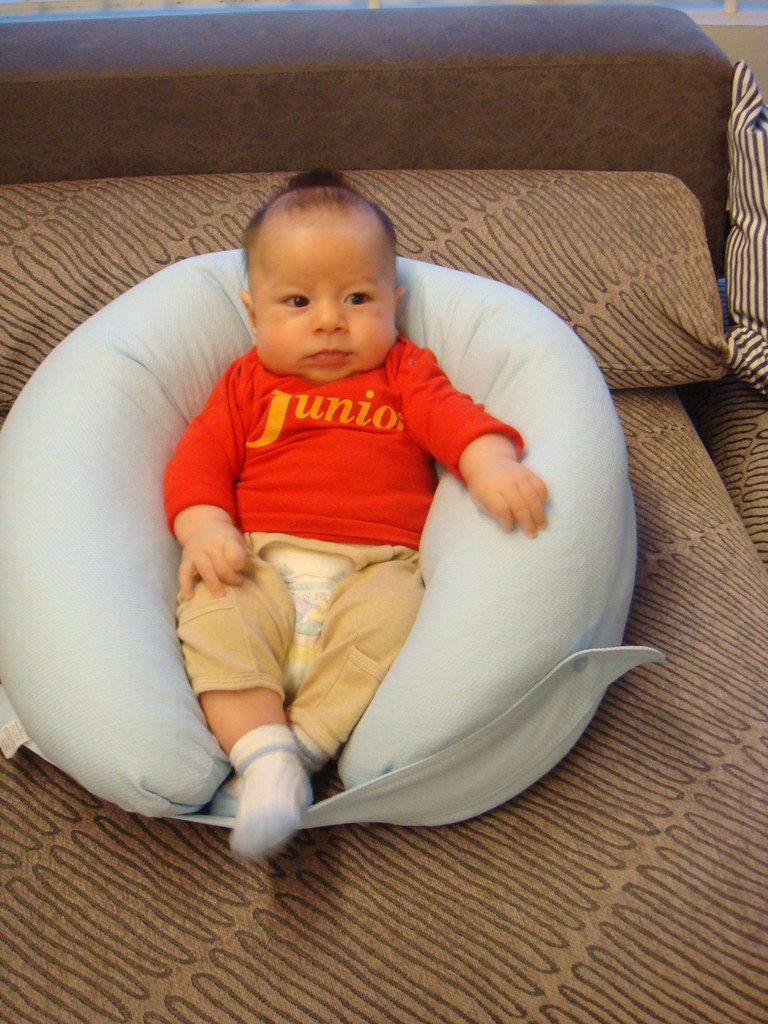
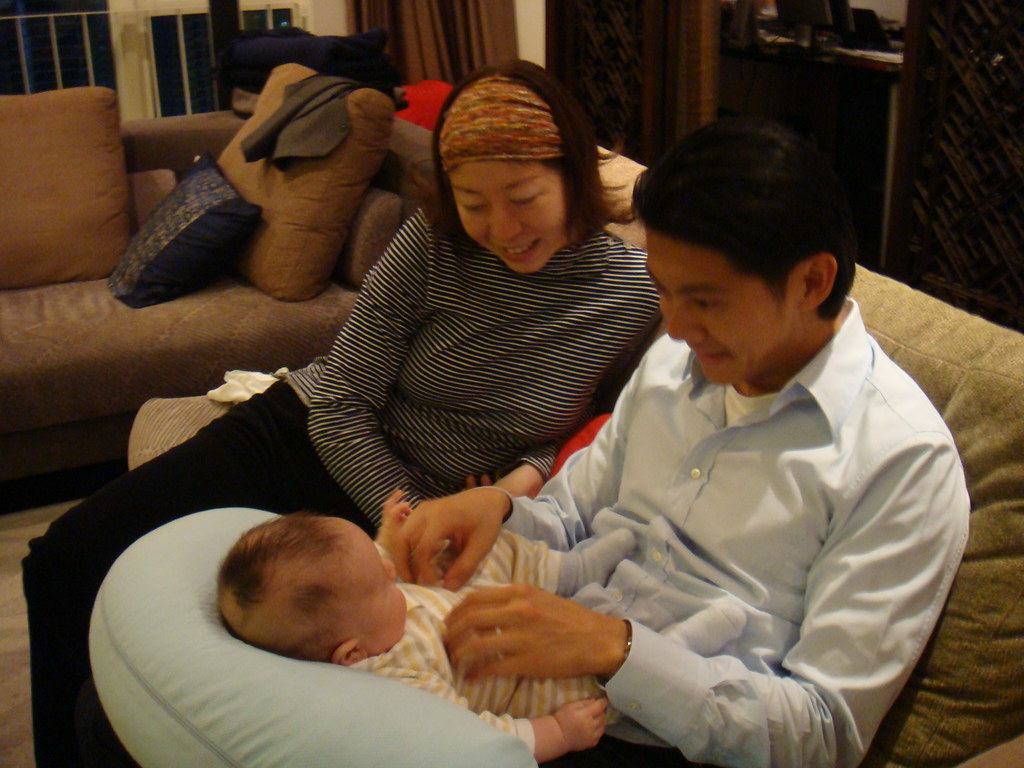
Yesterday was Scott’s 3-month ‘birthday’ and today he will take his first flight ever. He will spend a few days in Beijing with my wife, visiting family and of course to celebrate his 100-day anniversary (bai ri, we will organize a party for that).

Just now I was looking at his ticket and noticed that he will travel first class on his first flight! Wow, I think I was in my late twenties before I took first class for the first time – and that was only because of a free upgrade. Not that he will notice much, but my wife assumed it was easier with a kid in first class than in a crowded economy class. They will be on a B747 with a new first class lay-out, so not the crappy ones you often see on Chinese airlines. Enjoy the flight Scott, I will miss you next week.

Picture: Race car driver Ho-Pin Tung came to visit Scott this week, after his GP2 races in Malaysia

North-Korea vs. South-Korea match at Hongkou Stadium

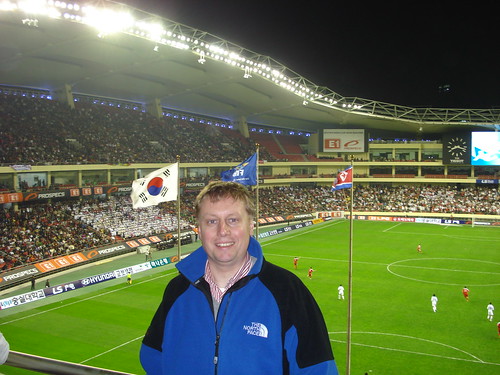
Last night I went to Hongkou stadium with several Spill Group colleagues to watch a football match between North Korea and South Korea. Not just a friendly match, but a World Cup 2010 qualifier. The original plan was to hold the match in Pyongyang, but the North-Korean government did not allow FIFA to flag the South-Korean flag nor to play the South-Korean National Anthem. So the match was moved to Shanghai, which was a good thing for South Korea, because there is a huge population of South Koreans in this city.

We did not have tickets for the match, so decided to go there a bit early to the Hongkou stadium and get some tickets on the black market. We underestimated the traffic jams, however, and arrived exactly 3 minutes before match time at the stadium. That turned out to be a lucky thing, because the ticket scalpers that still had tickets were very anxious to sell them – better a low price for a ticket than nothing at all. We managed to get VIP tickets that normally cost RMB 1000 for RMB 200, which seemed reasonable to us.

However, now the problem was to find the entrance. The ticket said gate 4, but at gate 4 the guards sent us to the next gate. And at the next gate they sent us back to gate 4. Then they told us to go up, so we walked up the stairs. But no, there they told us to go down again. It would have been funny if the match had not started yet, and I got pretty angry at the guards. Finally one of them said he knew how to get there and he would walk with us. Because we were in a hurry we sort of forced him to run with us. I asked him which gate we would have to enter, but he just pointed with his hands that we had to move ahead. Well, the end of the story is that we ran all around the stadium and ended up at the same location where we had started.

Now I was really pissed at the guy. The match was in full swing and we could not see it despite our high-end tickets. I made some angry remarks that I won’t repeat here, and went off to find a more knowledgable guard. Finallly we figured out that we had to go to down to the parking area, and take an elevator from there to our stands. We missed the first 15 minutes of the game because of this, but luckily nobody had scored so far.

Actually, nobody scored during the whole match, but it was still cool to see two teams that are technically still at war fight each other. Most of the audience consisted of South Koreans, but the DPRK had one section of the stadium filled up with its citizens. Despite their relatively small number they still managed to make a lot of sound when their team had possession of the ball.

Koen Bekkering, an intern at Spill Group Asia, got tickets in the middle of the South Korean crowd, and to our surprise we found out he was standing right below us. We watched him wave the South-Korean flag with the Koreans, and even wear a South-Korean t-shirt. Of course he had no idea we were watching him.

It was a nice match: the level of game play was not super, but the atmosphere in the stadium was great. I learned a couple of South-Korean football songs – well, at least the tune of them, no idea what they were realling singing. And our seats were fantastic, which also helped to enjoy the game of course. A good beginning of a nice evening, because after that we went out and some of us did not get home until 3:30 AM or so!

Interactive presentation

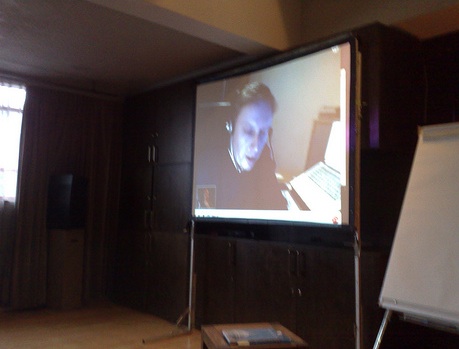
In about 10 days a big group (42 people) of mainly Dutch new media and IT executives will visit China for a one-week tour. I am part of the organization of this trip to Shanghai and Chengdu, and just now I gave a talk to all participants at their kick-off meeting in Vak Zuid in Amsterdam. Because I am in Shanghai I gave the talk through Skype, and despite the Great Firewall that went remarkably well.

Because many of the participants are on Twitter as well, I could follow their comments while talking – and comment myself as well. At least 2 people were streaming live on Qik, so I could even watch myself speak while speaking (sounds a bit weird, but watching yourself while you talk is even weirder). See one video here for example. And when I finished and looked at Flickr I already found several pictures of the kick-off meeting.

That’s what I like about the internet. When I arrived in China 8 years ago it was literally at the other side of the world. Now I sit at my desk at home and communicate live through 4 different tools with a group of people in Amsterdam – and all of this for free. OK, the quality of Skype was not constant, at one point I had to start again because the sound dropped and after my talk the Skype connection broke down twice. But it works, even if it is not yet perfect. I love all possibilities of the internet, and wonder what it will look like 8 years from now.

Photo: Marketingfacts

First dotAsia domains going live


Today I was reading an article about the new dotAsia domains in the South China Morning Post, where they announced that next week the dotAsia registry will go live. Spill Group Asia, however, already managed to get several of the best game-related names. Among others game.asia and games.asia, and both sites went live today! The current sites will be improved over the next couple of weeks and should become top destinations for online game players in Asia. I typed in several other .asia domains today, and it seems we are one of the first companies that went live on this top-level domain (or maybe even the very first!).

I was amazed to see that over 500,000 applications were filed for dotAsia domain names already, with 45,000 domains that received multiple applications. Some of the most sought-after names were buy.asia (more than 400 applicants), hot.asia, gold.asia, fun.asia, girl.asia, and of course sex.asia. According to the CEO of a leading domain-name acquisition firm “The .asia names have limitless potential. With over 510 million people online in the Asia-Pacific region, it’s the fastest-growing audience in the world.” I am therefore very happy that we managed to obtain these names, and that we can now start building great sites there.

Some domain names are already being auctioned, and I am surprised at the high prices that they fetch. For a domain like ace.asia a total price of more than USD 20,000 was paid, and mediaworld.asia went for over USD 10,000. Today bingo.asia and dating.asia will be auctioned off, giving an indication of the potential value of game.asia and games.asia. We will probably never sell these names, but it’s always nice to know 🙂

Uphill Rush a big hit online

Zlong Games, Spill Group’s game development studio, produces a lot of flash games. Most do pretty well, and some become huge hits. The latest blockbuster is Uphill Rush, a racing game with dirt bikes, quads, trucks and skateboards, where you can perform lots of tricks on several obstacle courses. The game is completely free, like all our games, and can be found on thousands of websites all over the internet. The game is so popular that people even started to make their own video’s of their performance in the game, and upload them to YouTube!

The clip below, for example, shows a person who manages to finish three levels without falling. Another one is this one, where someone is trying to do some insane tricks. Some even found cheats and uploaded them to video sites. Of course I am very happy to see that people like our games! Thanks to the team at Zlong Games for doing such a good job, and to the Spill Group team in Holland for coming up with these game designs.

Spill Group Asia's new office

When I set up Spill Group Asia just over 2 years ago we were just two people, and worked from the China Bay offices (where I was a managing partner at that time). Within a few months we were at 7 people and we had to move to a separate office. We managed to get into the Jiaotong University Incubator Center in Xujiahui, together with tens of other start-ups. A nice working environment for a young company, especially considering the free help from the university and the low rent.

But when companies grow there comes a time that you have to leave the incubator center. Spill Group Asia now has about 70 people (including the developers in our game studio Zlong Games), and therefore a few weeks ago we were asked to look for a ‘regular’ office. We were lucky to find a place quickly, in the same Creative Park where Tudou used to have its offices until about 2 years ago.


Right now Spill Group Asia divides its staff over two separate offices, but in the new place we will all be in one space. Much better for the communication and company culture. We can still grow a bit (we have over 650 m2 available) and the central location on the Suzhou Creek close to People’s Park is also not bad. We plan to move late April / early May to the new office, after we finish redecoration of the place.

View from the new office, not very exciting 🙂

150 days to go – and the excitement is building up

Every day the Shanghai Daily’s front page shows how many days are left until 08-08-08, the opening ceremony of the Beijing Olympics. Today the front page told me that in exactly 150 days the Olympic Games will start. China already has its dedicated Olympic TV Channel where you can watch Chinese sportsmen and women prepare for the Games, or where they repeat all kinds of sports from past Olympics. It has become my station of choice to watch while running in the gym.

Also the preparation for the Olympic Torch relay is in full swing, and one of our friends was actually selected to be the torch runner for part of the route. The torch will even go to the top of Mount Everest this year, they were testing the feasibility of that during our Lhasa-Kathmandu bike ride last year, when we passed through Everest Base Camp. I am sure the progress of the torch run will be in the news every day.

Ogilvy decided it was a good time to do some research on the level of excitement of the Chinese for the Olympics, the Shanghai Daily reported today. According to their research 74 percent of the Chinese are either “excited” or “very excited”. In Beijing 79% of all people said that they were excited, and only 2% would leave the city in August (note that Chinese normally do not go on summer holidays like most Europeans do).

Strangely, the population of Beijing’s satellite-city Tianjin was among the least excited (no percentage reported). They would have the advantage that they could travel to Beijing by train for the event, without all the hassle of restrictions in car usage and other Olympic annoyances in their city. What’s also surprising is that the highest level of excitement was measured in Guangzhou (80 percent). This city is over 2000 km south of Beijing, and you would expect that the further away the less the excitement would be.

Generally I feel that the level of excitement is a lot higher than what I see around me. Most of my friends and colleagues in Shanghai like the Olympics, but it’s not (yet) a very big thing to many of them. Many tell me they would not even consider going to Beijing, in order to avoid the crowds and traffic problems.

According to the article 34 percent of Shanghainese plan to travel to Beijing for the Olympics. This is a figure I refuse to believe. That would mean that about 6 million people would travel from Shanghai to Beijing (and back) during the Olympics, totally impossible. Most could not even pay for the trip, especially not with the skyrocketing hotel prices. I therefore have some serious doubts about how the survey was performed. It’s nice for Ogilvy’s PR, but something about the results cannot be correct.

But whether the results are correct or not, I am sure the Games will be a huge success, and of course I am going to be there. I booked all event tickets long in advance, and also have my airplane tickets to Beijing (I even managed to use my Air China miles for that). So watch this blog in August for Olympic updates!